How Tubbo Became a Hosting Provider: Inside PlayHosting's 2026 Infrastructure
Inside PlayHosting’s 2026 infrastructure: Ryzen compute, large-scale storage, DDoS protection, and the VPS business funding free Minecraft hosting.


Free Minecraft hosting sounds simple until the service becomes popular. Every new user adds pressure on compute, storage, bandwidth, support, and abuse prevention, while the core product itself generates little or no direct revenue. What begins as a homelab experiment can quickly turn into an infrastructure problem, and eventually a business problem, if the service is expected to survive.
 Alex Denault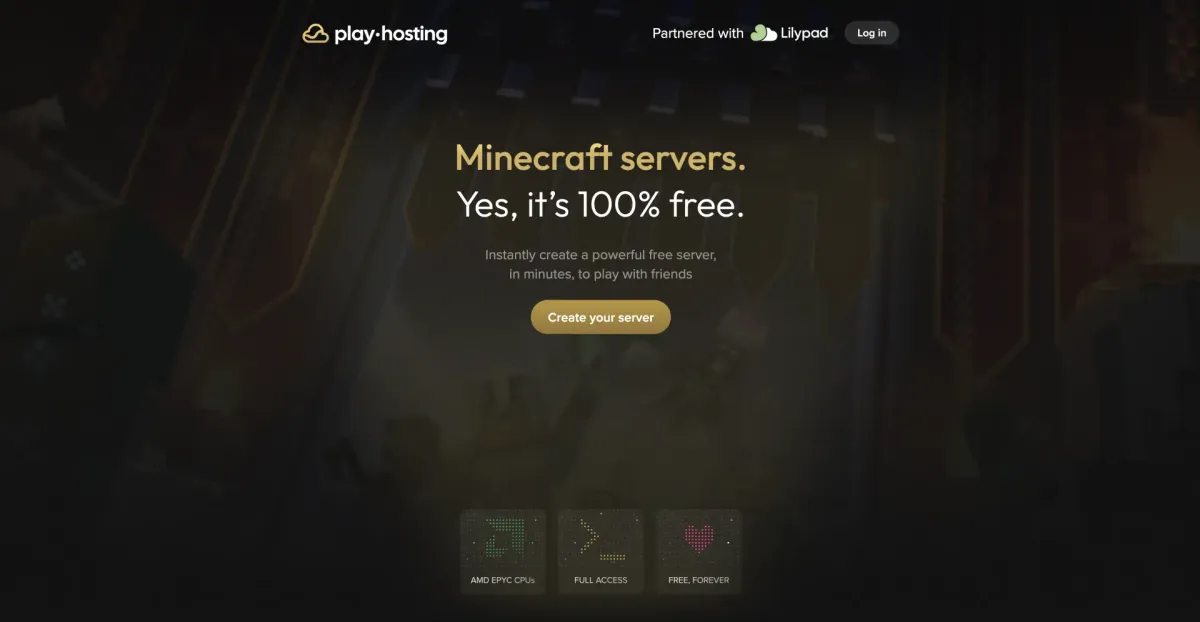
Check out our first Play Hosting article, explaining how it all started.
That is what makes PlayHosting interesting in 2026. When Technodabbler first looked at Tubbo’s project in 2025, it was already growing beyond its original EPYC-based homelab and experimenting with Ryzen nodes, custom Pterodactyl tooling, and a storage system built around inactive Minecraft servers. A year later, the scale is different. PlayHosting now operates dozens of Ryzen systems, dedicated VPS hypervisors, a large RAID 10 NAS, a redesigned network with redundant switching, and a paid hosting business that helps fund the free platform. The project has also had to contend with DDoS attacks measured in hundreds of gigabits per second, Pterodactyl scaling problems, rising power costs, and the physical limits of running this much infrastructure from an office.
This update looks at how the hardware and storage architecture have evolved, how PlayHosting rebuilt its network to handle both growth and abuse, and how VPS and dedicated hosting turned the infrastructure itself into the business supporting the free service.
From Homelab to Hosting Provider
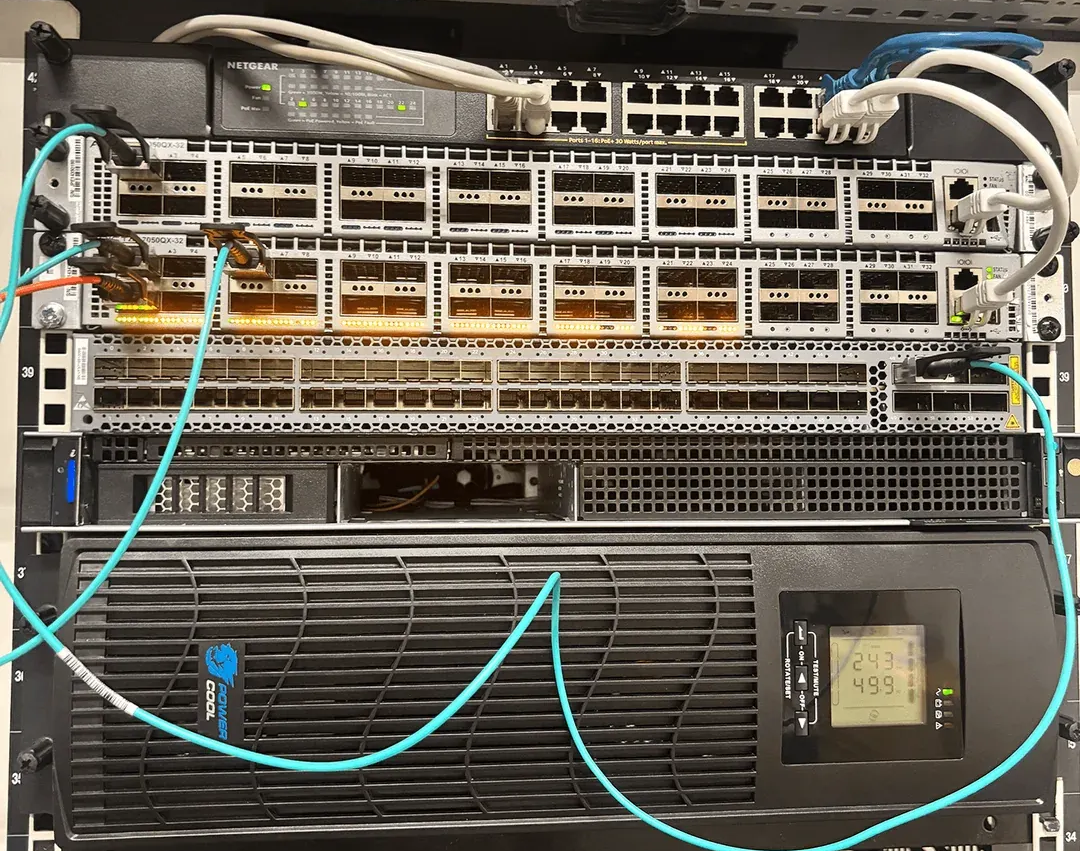
The most obvious change since 2025 is physical infrastructure. PlayHosting has expanded from a crowded homelab rack into a small server room organized around three full-height racks, a separate management rack, and dedicated carrier and fiber equipment. The left and middle racks hold most of the compute and storage hardware, while the right rack has become a dedicated network core containing the router, switching, and battery backup. Power is backed by large UPS batteries and distributed across three separate 30-amp consumer units, giving the growing server room more electrical capacity than the original homelab setup. Management traffic has also been separated onto its own network, with an independent Internet connection and cellular fallback. Even cooling has become part of the infrastructure, with dedicated air conditioning required to keep the active racks within reasonable temperatures.
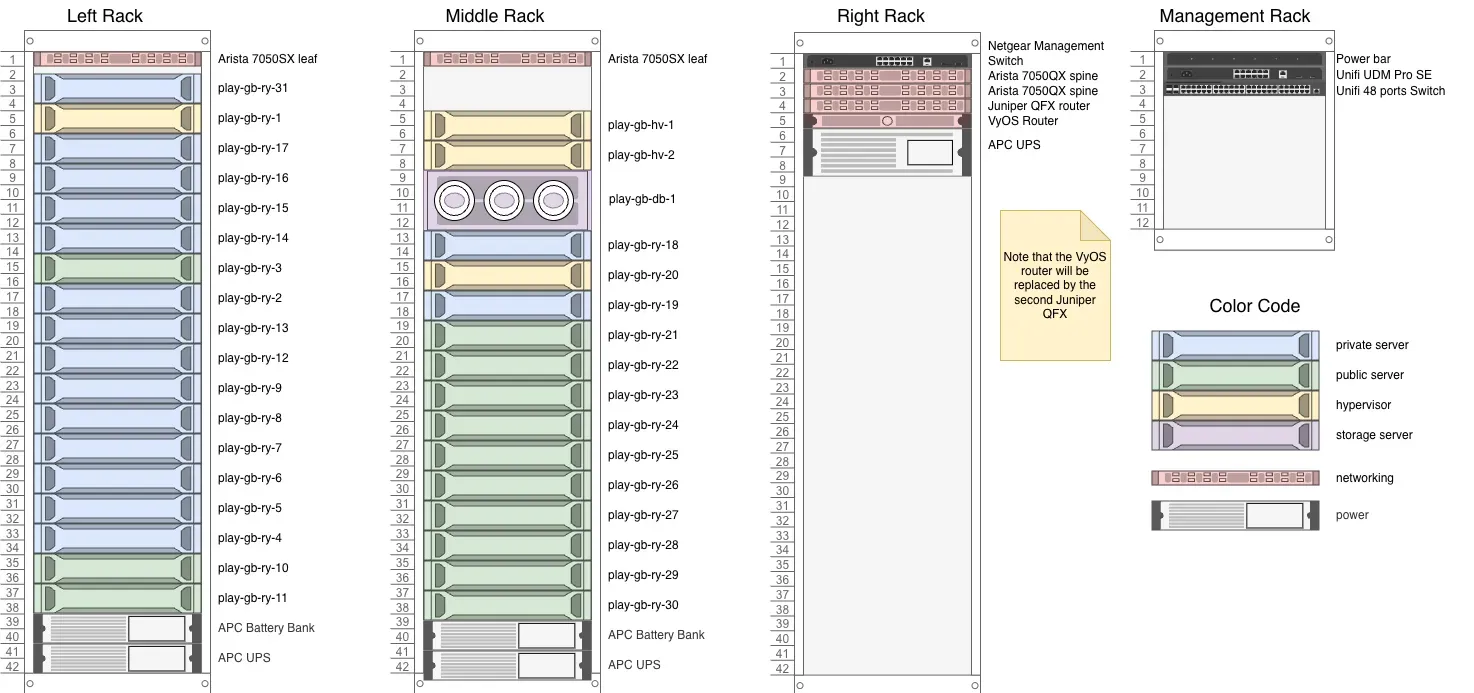
As explored in the original PlayHosting article, Tubbo had already started moving Minecraft workloads away from the first EPYC systems and toward Ryzen 9 7950X nodes, where stronger single-thread performance is a much better match for Minecraft. The 2026 infrastructure takes that idea further by standardizing the public hosting pool around Ryzen hardware while finding a new purpose for the older EPYC machines. Rather than retire them, Tubbo repurposed the high-memory servers as VPS hypervisors. Those hypervisors now run Debian 13 with VirtFusion managing the VPS platform, although Tubbo says high-availability virtual machines are still a work in progress. The old EPYC systems may be weak for Minecraft, but their large RAM capacity makes them well suited to inexpensive VPS plans built around containers, development environments, and other workloads. As such, PlayHosting is increasingly matching hardware to workload.
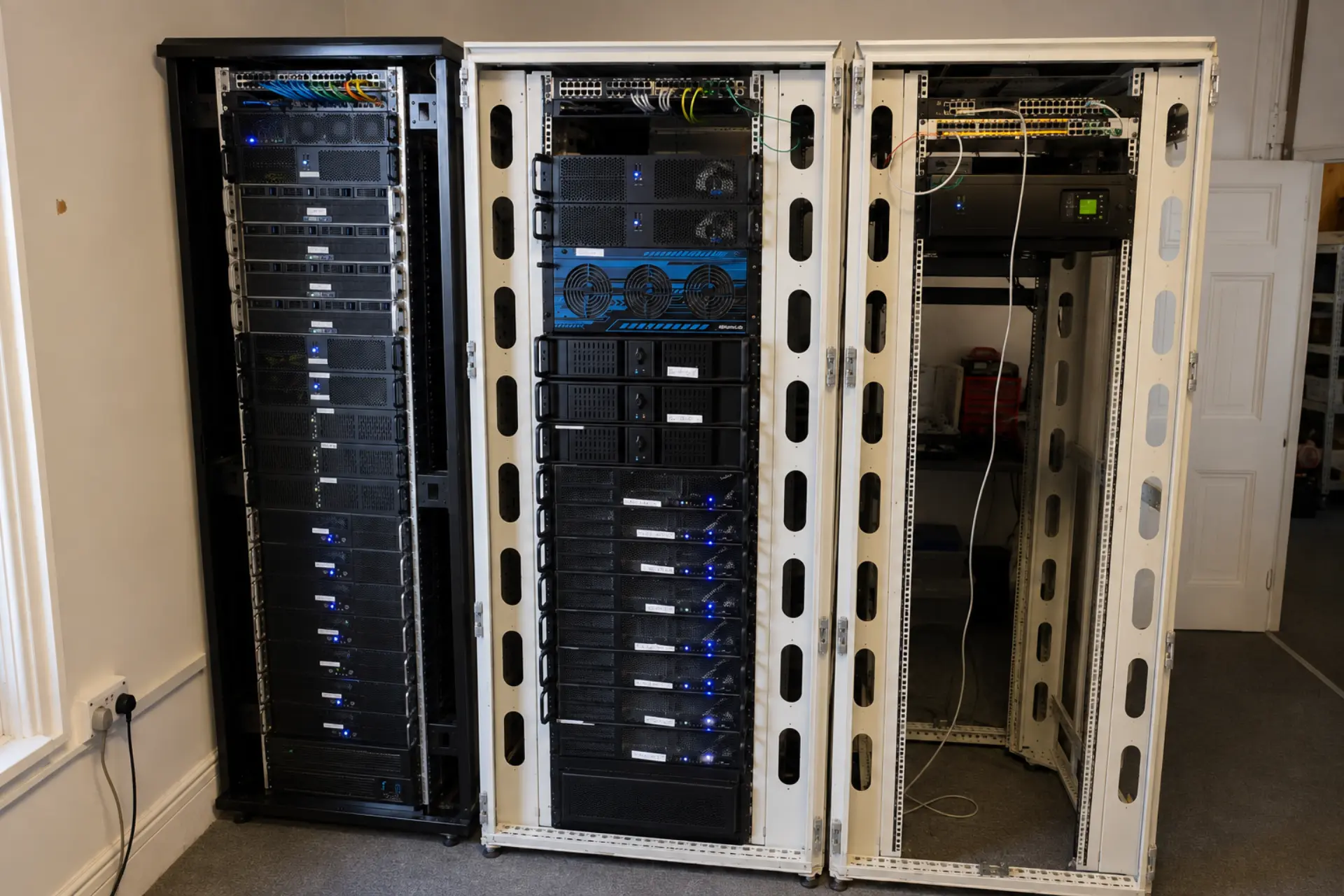
Most of the play-gb-ry fleet, from the early nodes through play-gb-ry-30, is built around Ryzen 9 7950X processors with 128 GB of DDR5 memory, 1 TB of Gen 4 NVMe storage, and 10 Gbps SFP+ networking. PlayHosting’s public status page also shows that these assignments are not permanent. Some nodes that appeared as private Minecraft servers in earlier videos now sit in the public pool, while play-gb-ry-20 has since been reassigned as a VPS hypervisor. The newest addition, play-gb-ry-31, moves to a water-cooled Ryzen 9 9950X and currently serves in the private pool. PlayHosting can therefore move the same basic hardware between free hosting, larger private Minecraft networks, VPS workloads, and dedicated customers as capacity and demand change.
Storage, Scheduling, and Pterodactyl
PlayHosting may have created more than one million Minecraft servers, but only a small portion of them can run at the same time. Each free server is allocated roughly 3 GB of RAM, with the ability to burst to around 5 GB when needed. Tubbo estimates that a typical free-hosting node can therefore support around 30 to 35 active Minecraft servers at once. Across the public pool, users are competing for a finite amount of active capacity, which is why starting a server often means entering a queue. During the week, Tubbo says the wait is usually around seven minutes, although weekends can take longer as concurrent usage rises. That capacity limit also helps explain the newer Playerbase Program, which gives established servers with more than 30 concurrent players access to 24/7 hosting and dynamically scaled resources rather than repeatedly sending them through the normal free-hosting lifecycle.
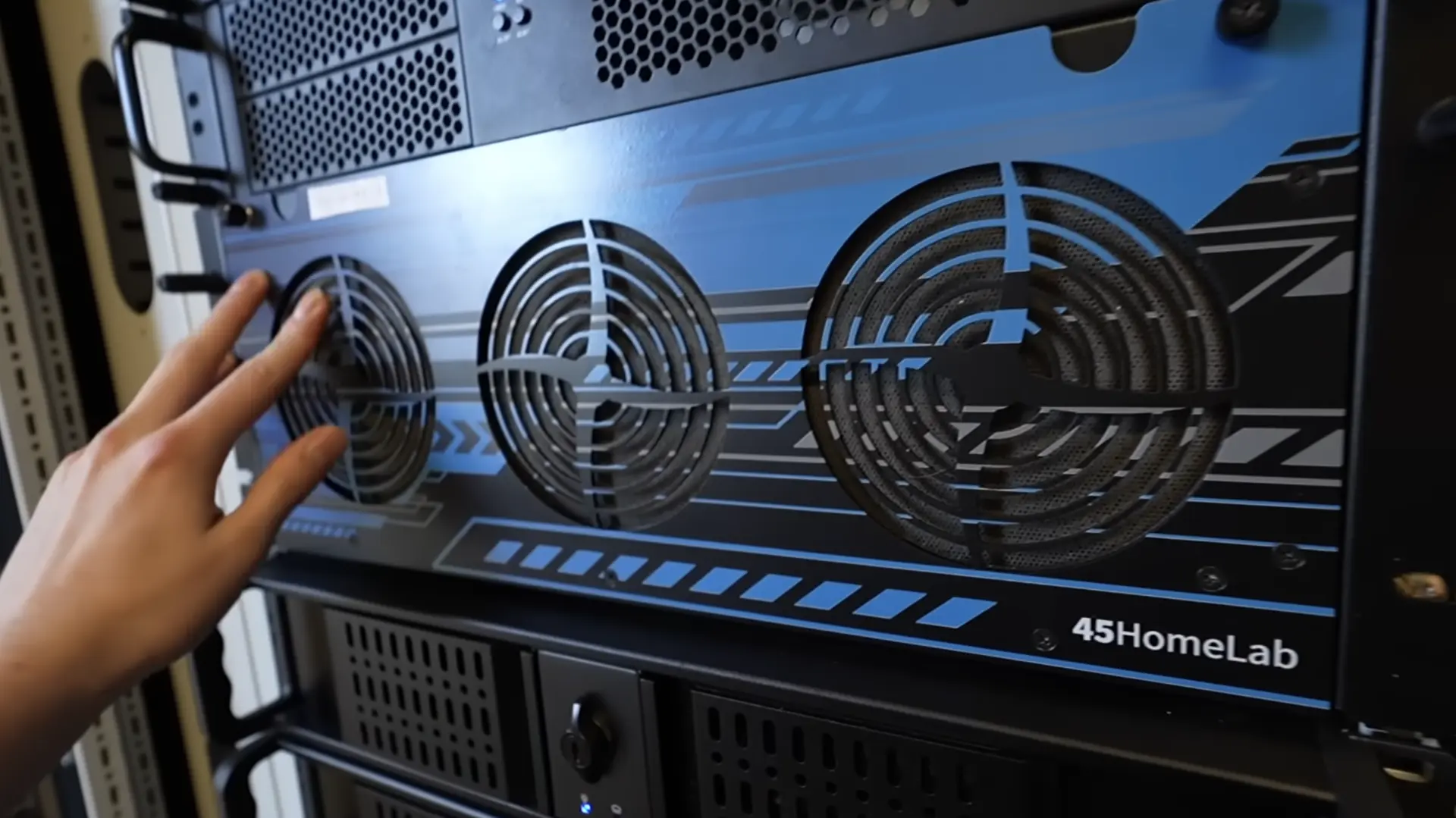
Most of the million-plus servers therefore spend their time inactive. Their Minecraft worlds, mods, plugins, and configuration files still need to be retained even when no compute resources are assigned to them. This is where Tubbo’s terminology can be slightly confusing: when he refers to the large GB “database” in the rack, he is primarily talking about the storage system holding these user files rather than a traditional relational database. The current system is a 172 TB NAS running RAID 10, with dual 40 Gbps QSFP networking, and the active dataset exceeds 40 TB. That data is also replicated to Germany on a Hetzner server, providing an offsite copy if the local storage system fails. PlayHosting already used the same basic unload-and-restore model in 2025, but the storage capacity, replication, and scheduling surrounding it have grown substantially as the number of users increased.
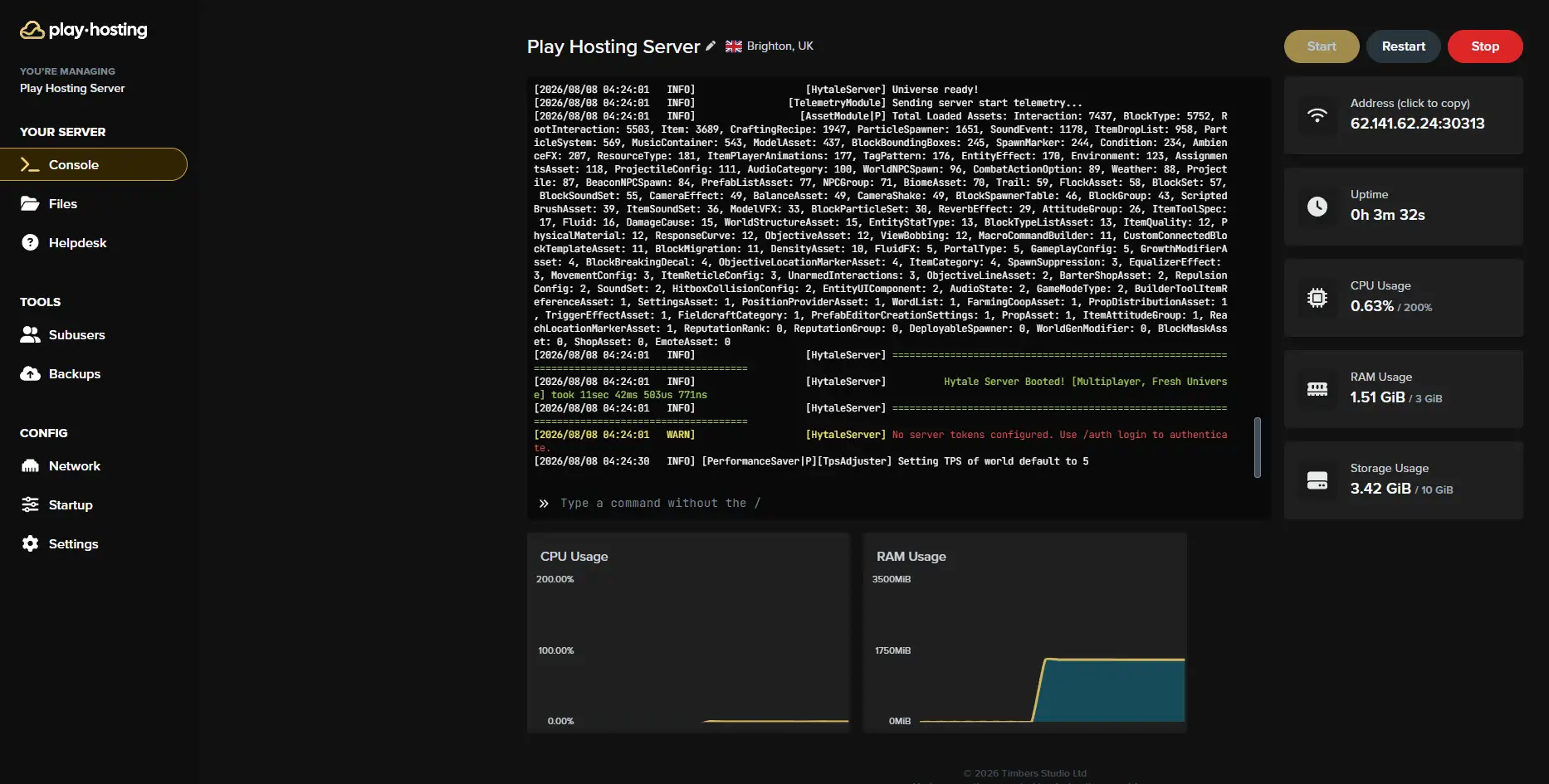
PlayHosting is powered by Pterodactyl, an open-source game server management panel that handles tasks such as creating server instances, assigning resources, and managing files. It uses a heavily customized version because the platform has grown well beyond the scale of a typical Pterodactyl deployment. Tubbo has described database-backed pages taking as long as 30 seconds to load once the service reached hundreds of thousands of users, forcing the team to fork and optimize parts of the panel. In his latest update, he also confirmed that the team built additional caching, backup, and Limbo-related changes around that fork. The current interface exposes information such as active RAM usage, deployed servers, available ports, and node capacity without relying on the slower queries that became problematic at scale. PlayHosting has also continued developing its node-less scheduling model, allowing inactive servers to be restored onto whichever suitable node has capacity rather than remaining tied to the machine where they were originally created. The mechanics behind Limbo and cross-node restores were covered in the original PlayHosting article, but by 2026 they have become part of a broader scheduling system built around a global queue and a much larger pool of interchangeable compute nodes.
The Network
As PlayHosting grew, the network became one of the harder parts of the infrastructure to scale. The platform now has to handle normal Minecraft traffic, large volumes of downloads and backups, public VPS and dedicated-server traffic, and malicious traffic aimed at both customers and PlayHosting itself. The local connection has grown from the earlier multi-gigabit setup to a dedicated 10 Gbps point-to-point link, terminated by an ISP-provided Cisco router before reaching PlayHosting’s own routing and switching hardware. Tubbo has said the previous 3 Gbps connection was being saturated, making the 10 Gbps upgrade less about future expansion than removing an existing bottleneck. The new circuit is unmetered at a fixed monthly cost, which is especially important for a service where free users can generate substantial traffic without directly paying for bandwidth.
PlayHosting’s external network has changed as significantly as the hardware inside the racks. In 2025, much of the public traffic was still routed through OVH, which provided upstream connectivity and DDoS protection before forwarding traffic back to Brighton. By July 2026, PlayHosting announced that it had moved away from OVH entirely. Tubbo has since confirmed that PlayHosting runs eBGP, uses its own IP space, and rents IPv4 blocks through IPXO. Routing data for its 62.141.62.0/24 address range shows the same transition: the block was previously announced through OVH, while a newer route appeared through AS203758, operated by EUGAMEHOST LTD. That does not reveal the complete topology, but it strongly suggests that EUGameHost has become part of PlayHosting’s upstream path. For a Minecraft-focused service, that is a logical fit, since game-hosting networks are accustomed to dealing with the Layer 7 attacks and protocol-specific abuse common around public Minecraft servers. The scale of that protection is significant, with Tubbo reporting daily Layer 3/4 and Layer 7 attacks exceeding 900 Gbps. He says OVH’s mitigation could absorb a large portion of the attacks, but enough malicious traffic was still leaking through to overwhelm PlayHosting’s 10 Gbps connection. During some attacks, Tubbo estimates that 100 to 200 Gbps of traffic remained after mitigation, and repeated attacks could also cause OVH to null the origin entirely, cutting off legitimate traffic along with the attack. The new edge-protection provider has so far reduced that leakage dramatically, with Tubbo previously reporting no more than 0.002 percent getting through, alongside slightly lower latency between Brighton and London. PlayHosting has also chosen to remain IPv4-only for now, with Tubbo citing the additional complexity of DDoS mitigation over IPv6 as the reason.
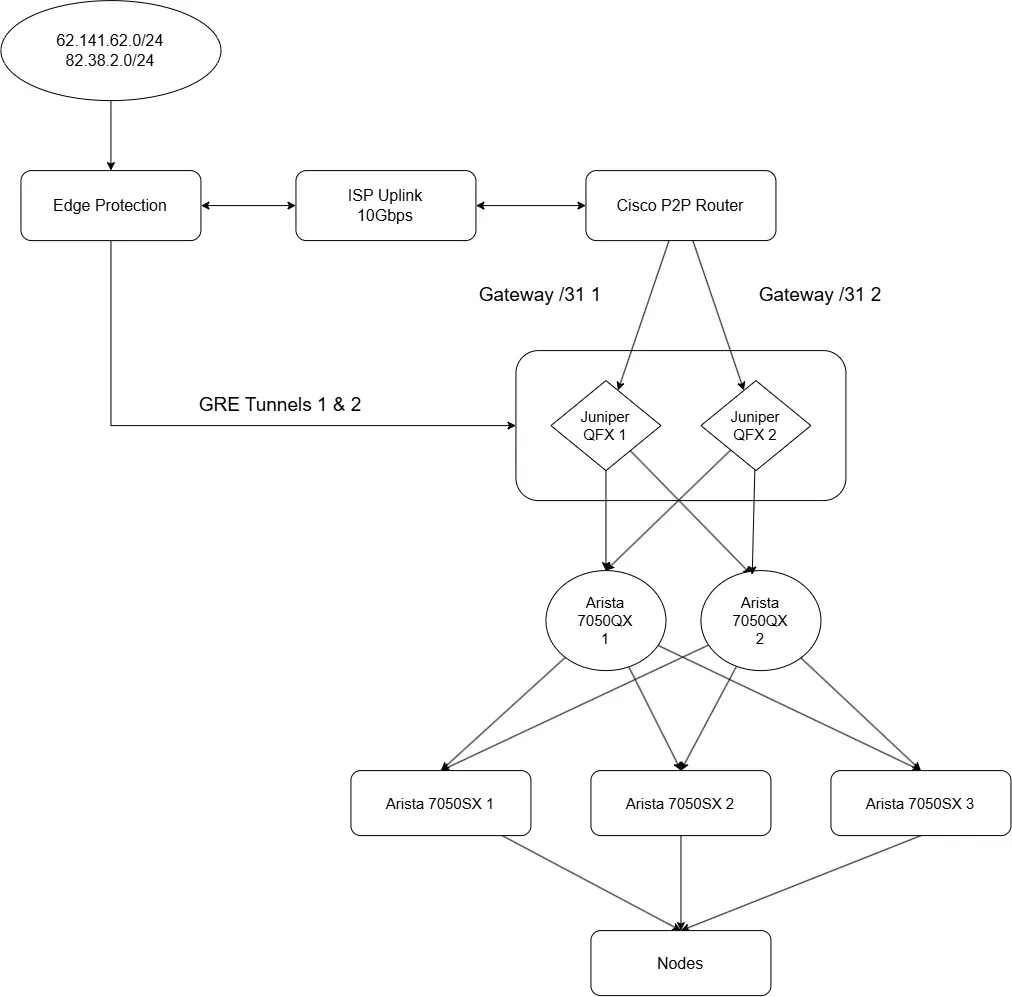
Upstream filtering only addresses traffic arriving from the Internet. PlayHosting also has to control traffic originating inside its own infrastructure, particularly from free Minecraft containers and customer VPSs that cannot be treated as trusted workloads. A compromised container can scan external networks, participate in a botnet, or generate large numbers of small packets without ever saturating its assigned bandwidth. The internal network has now been rebuilt around three Arista 7050SX leaf switches, two Arista 7050QX spine switches, and two Juniper QFX5100 switches that handle GRE encapsulation in hardware. Each Juniper terminates a GRE tunnel to the edge-protection provider, with traffic load-balanced across the pair so one switch or tunnel can be taken offline without dropping the network. Both Junipers connect to both spine switches, which in turn connect to all three leaf switches. This removes the VyOS firewall router from the long-term traffic path and moves GRE encapsulation onto hardware designed to perform it without burdening a general-purpose CPU. The network still has to enforce limits in both directions: the upstream provider absorbs attacks aimed at PlayHosting, while the local routing and switching layers contain traffic generated by the infrastructure itself.
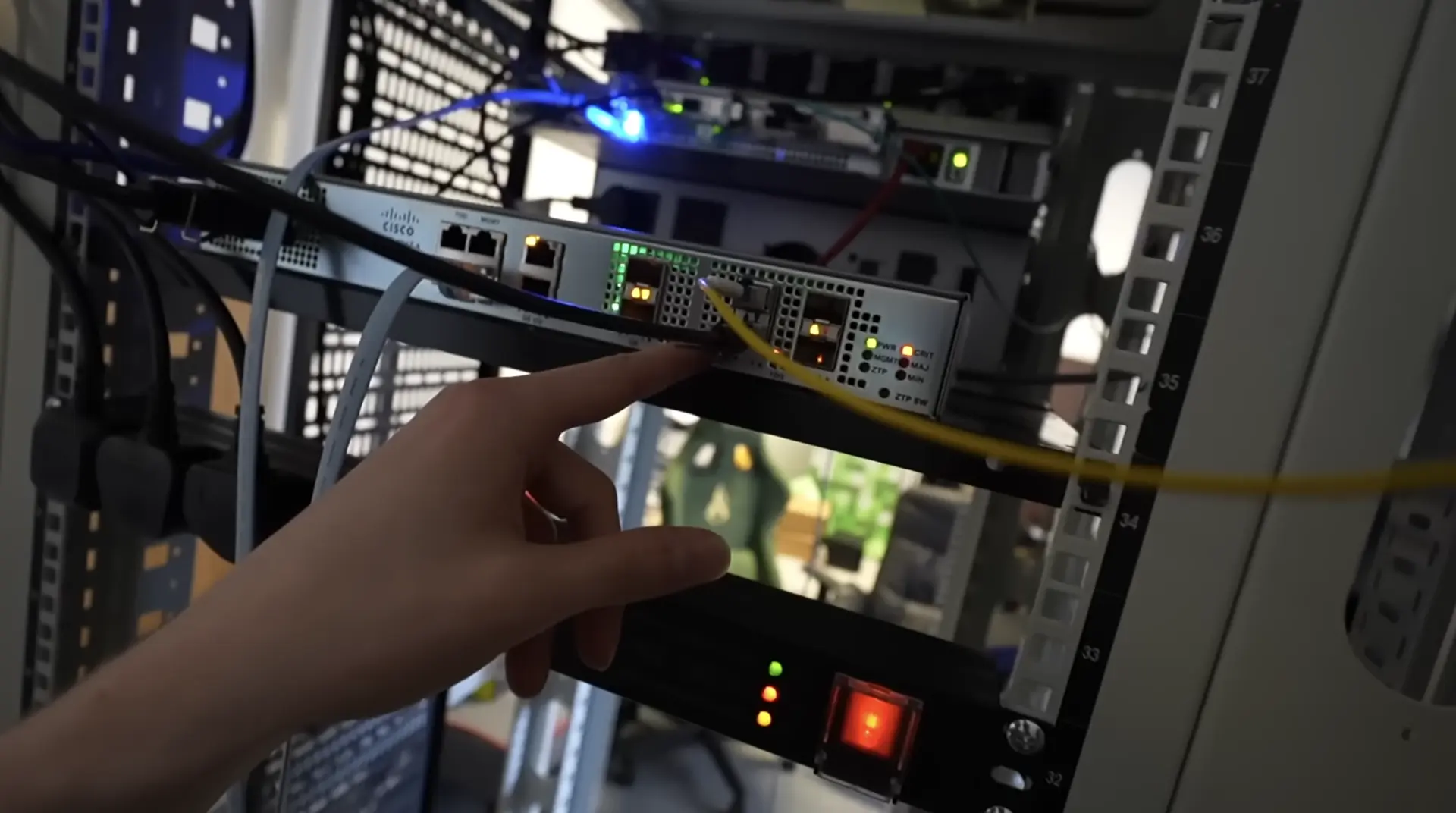
PlayHosting has also separated management traffic from the production network. The management side uses its own Internet connection and switching, with a cellular 4G/5G connection available as a fallback if the primary path is unavailable. That separation gives Tubbo a way to reach management interfaces and diagnose equipment even when the production router, core network, or 10 Gbps service is having problems. In a smaller homelab, management traffic often shares the same network as everything else. At PlayHosting’s current scale, keeping an independent path into the racks reduces the chance that a production outage also removes the tools needed to troubleshoot it.
When the Infrastructure Became the Product
Free hosting is easy to offer for a short period and much harder to sustain as the audience grows. Every new user adds some combination of compute, storage, bandwidth, support, and replacement costs, while the service itself produces no direct revenue from that user. For a free hosting provider to last, the infrastructure eventually needs to support a business around it. PlayHosting’s answer has been to turn the same platform into a broader hosting service.
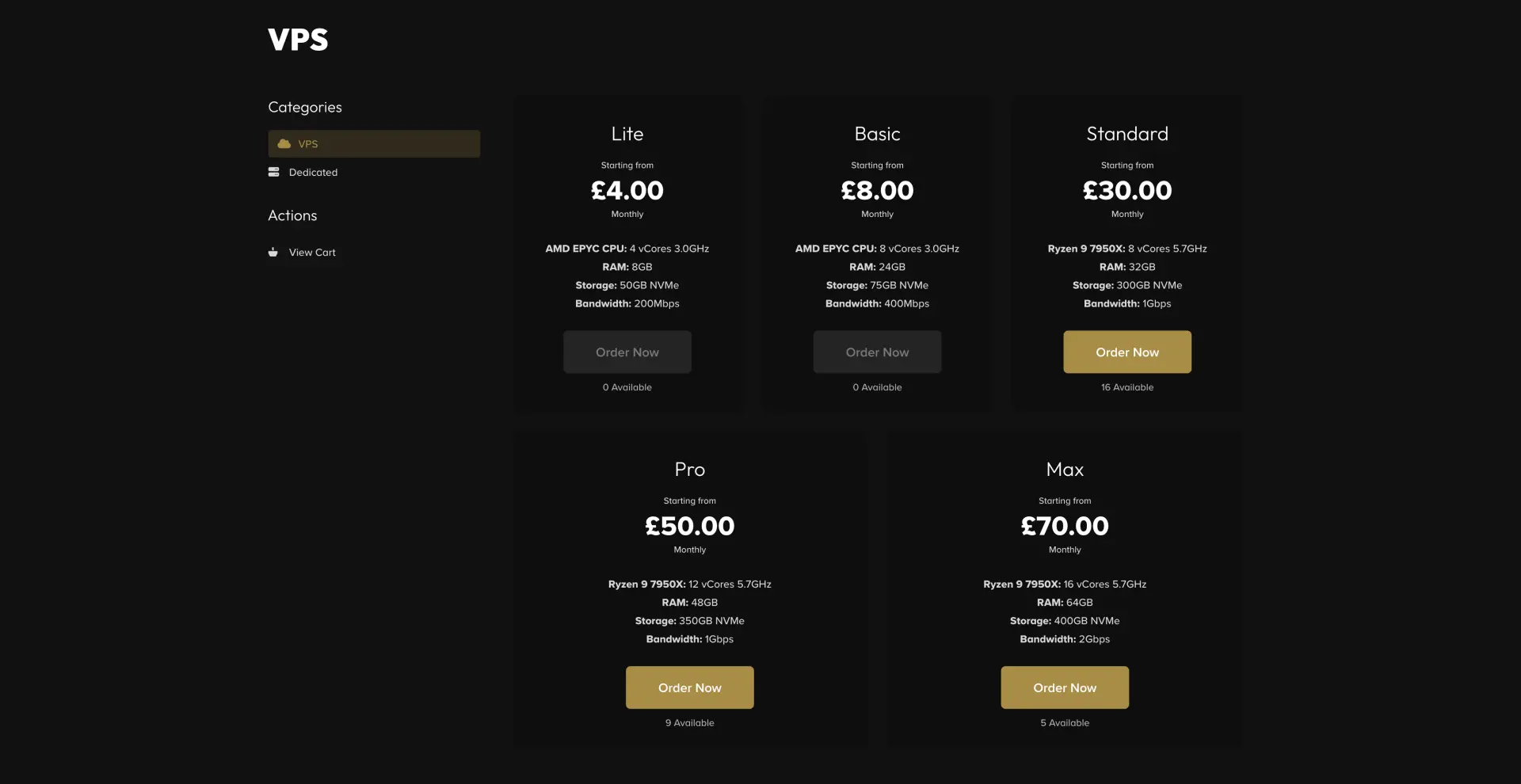
The diversification of PlayHosting’s infrastructure started in 2025 and continued through 2026. The same racks now also host paid VPS plans, dedicated servers, and private Minecraft workloads, turning spare or repurposed capacity into something PlayHosting can sell directly. The older EPYC systems are a good example: their large memory capacity makes them useful as lower-cost VPS hypervisors even though newer Ryzen systems are better suited to Minecraft’s single-threaded workloads. Ryzen hardware can also be assigned to higher-performance VPS plans, private customers, or dedicated rentals. Tubbo now says VPS hosting accounts for roughly 80 percent of PlayHosting’s total revenue, enough to fund additional free-hosting nodes and better backups. That flexibility gives PlayHosting a way to earn revenue from the same hardware, network, storage, and operations that keep the free service running.
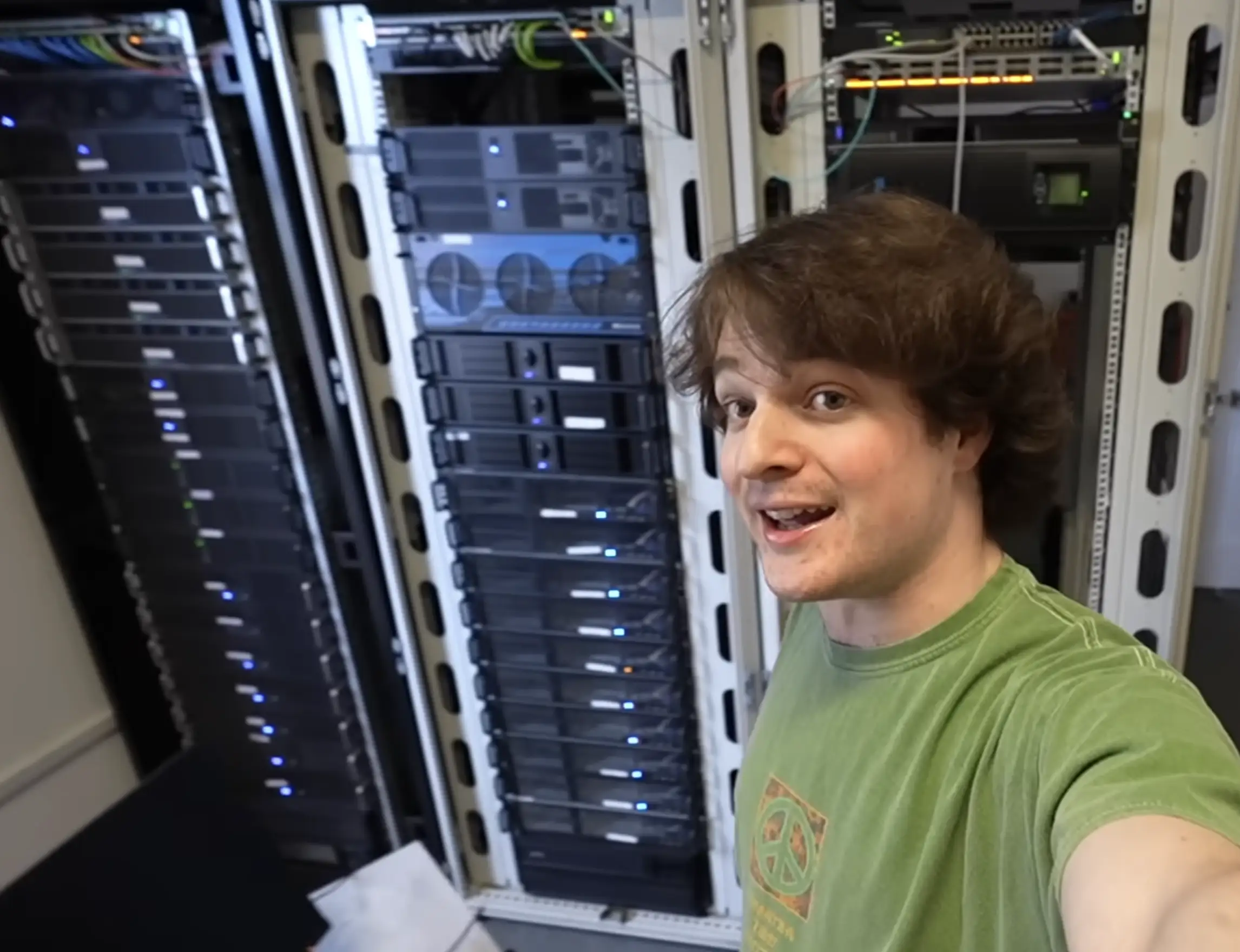
Tubbo also has advantages that a conventional hosting startup would have to pay to acquire. His audience provides PlayHosting with a built-in source of users, while sponsorships and hardware partnerships can reduce the cost of expanding the platform. His position in the Minecraft community also puts the service in front of larger server operators that may eventually become private or dedicated-hosting customers. Discord plays a practical role in that relationship, serving as a support channel, a place to announce hardware restocks and service changes, and a way to identify more established communities through programs such as priority support for boosters and the Playerbase Program. PlayHosting is therefore growing through a combination of infrastructure sales and community reach, rather than relying entirely on conventional advertising or a separate sales organization.
Modern Retrospective: What Comes Next
PlayHosting’s growth has solved many of the capacity problems that defined its earlier infrastructure, but the next challenges are increasingly about redundancy rather than raw performance. The current server room still contains several important single points of failure. The local storage system is replicated to Germany, which protects the data itself, but a failure of the UK storage server would still remove the fastest path to active Minecraft files. The network is now more redundant than earlier videos suggested, with paired Arista spine switches, paired Juniper switches, and redundant GRE tunnels to the edge-protection provider. The remaining network weakness is the ISP handoff, where a single Cisco termination and fiber path can still take the production network offline. Tubbo says he is working toward a 24-core fiber installation that would make it possible to add multiple local enterprise uplinks without redesigning the rest of the network. The dedicated air conditioner is another shared dependency because a cooling failure could affect much of the active infrastructure. Adding local storage redundancy, a second production uplink, and redundant cooling would reduce the impact of individual failures.
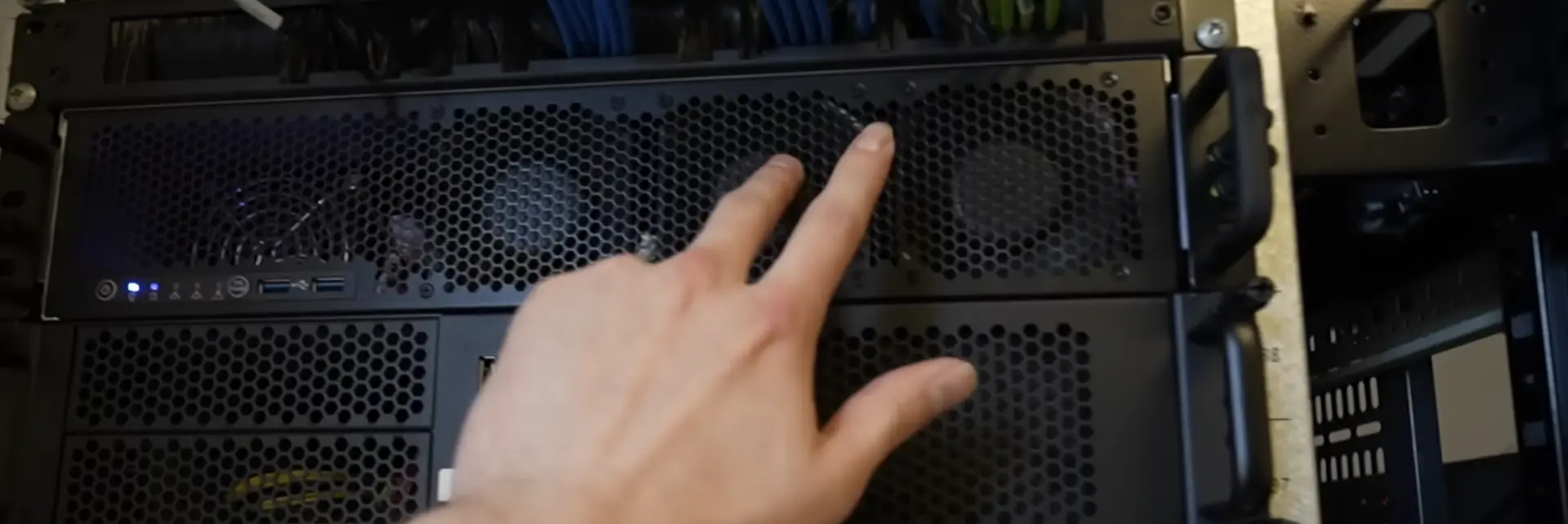
The water-cooled Ryzen 9 9950X server is another choice worth reconsidering. Liquid cooling can work well, but a production server benefits from simpler components and easier field replacement. Linus Tech Tips has publicly documented how a coolant leak in its own server environment created a much larger maintenance problem than a failed air cooler would have caused. In a rack expected to run continuously, a conventional air-cooled design would be easier to repair and introduce fewer failure modes.
At some point, that raises a broader question about whether PlayHosting still belongs in an office server room. A colocation facility would provide redundant cooling, power backed by generators and UPS systems, physical security, fire suppression, carrier diversity, and remote-hands services without PlayHosting having to build each of those systems itself. Moving would add cost and reduce the immediacy of working directly beside the hardware, but the economics change as more paying customers depend on the service. Tubbo’s latest update also makes the limits of the current location clearer: the racks are already drawing enough power to produce monthly electricity bills of roughly £1,200 to £1,800, and he has been unable to secure a second production uplink because other providers will not service the building. PlayHosting’s first phase was largely about finding enough compute, storage, and bandwidth to meet demand. Its next phase will be about ensuring that no single server, router, cooling unit, uplink, or building can take too much of that capacity offline.
What part of PlayHosting’s evolution stands out most to you: the compute hardware, the network design, or the business model that now supports the free service? For a broader look at building and expanding this kind of infrastructure, read Technodabbler’s Ultimate Homelab Guide, which covers the hardware, networking, storage, and planning decisions behind a capable home lab. Subscribe to the Technodabbler mailing list for future Homelab and Projects articles, infrastructure experiments, and follow-ups.